Insight Magazine

by CitiPlug

Vol. 01 — No. 07
Culture & Heritage

Ojúde Ọba Must Be Preserved Beyond Social Media Popularity

What UNESCO recognition would mean for one of Nigeria’s most visible cultural festivals and why the work of preservation must begin long before the applause, fashion photographs and viral moments fade.

Ink Man·26 July 2026
Ojúde Ọba Must Be Preserved Beyond Social Media Popularity

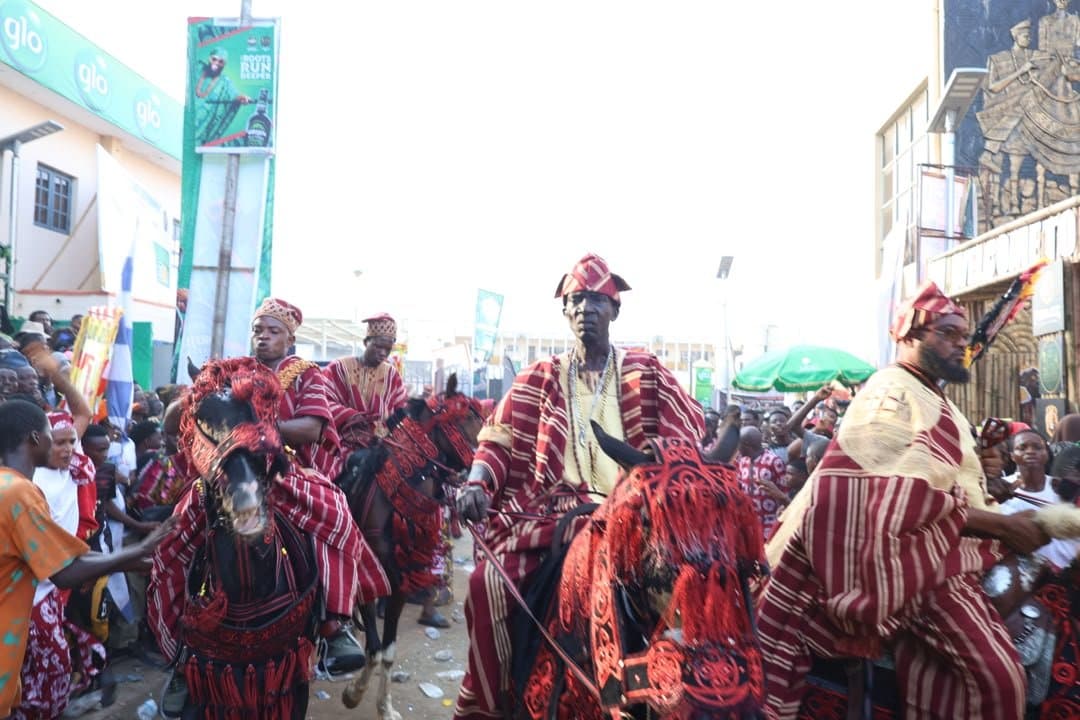
UNESCO – There is a particular kind of excitement that follows Ojúde Ọba every year. Long before the first horse enters the palace grounds, photographs begin to circulate, families prepare their fabrics, Regberegbe groups coordinate their appearances, photographers secure vantage points, and visitors make their way into Ijebu Ode. By the time the festival reaches its peak, social media has already transformed it into something larger than the physical gathering itself.

The photographs travel quickly, a horse rider becomes the face of the day, an outfit is analysed across Instagram and X. Short videos of coordinated age-grade groups move from WhatsApp status updates to international platforms. Fashion commentators select their favourites, celebrities arrive, brands position themselves around the spectacle, and for a few days, Ojúde Ọba becomes one of the most discussed cultural events in Nigeria.

That attention is valuable, it has helped introduce the festival to younger audiences, attracted visitors who might never previously have considered travelling to Ijebu Ode, and positioned Ijebu culture within a much wider national and global conversation, but popularity and preservation are not the same thing.

A festival can trend every year and still lose parts of its original meaning. It can attract millions of impressions while the stories behind its ceremonies remain undocumented. It can become famous for fashion while the structures that gave that fashion cultural significance gradually weaken. It can be celebrated around the world while the people who inherited, practised and sustained it remain absent from decisions about its future.

Ad Slot — 728×90

This is why the growing conversation around UNESCO recognition for Ojúde Ọba should not be treated as another publicity opportunity. It should be understood as a serious cultural responsibility.

A historic edition and a larger question

The 2026 Ojúde Ọba Festival carried an emotional weight that separated it from previous editions. It was the first held in honour of the late Awujale of Ijebuland, Oba Sikiru Kayode Adetona, whose 65-year reign had become inseparable from the modern identity of the festival. Proceedings were led by Chief Sonny Folorunsho Kuku, OFR, the Ogbeni Oja of Ijebuland and head of the Awujale Interregnum Administrative Council.

The theme, “Celebrating the Legacy of Oba Sikiru Adetona,” placed memory at the centre of the celebration. Ojúde Ọba was no longer simply returning as an annual gathering; it was entering a new period without the monarch whose presence had shaped how generations experienced it.

The public response reflected the importance of that moment. According to the HeritageMetrics assessment, based on media data from P+ Measurement Services, the festival generated 28,735 mentions, reached an estimated 218.6 million people, recorded 745.3 million impressions and attracted 8.4 million engagements. Social conversations reached 81,240, positive sentiment stood at 79 per cent, and coverage extended across 11 countries.

Ad Slot — 728×90

The edition received a HeritageMetrics HM Index score of 90 out of 100, earning a Platinum classification and becoming the strongest edition recorded across the measured categories.

Those numbers demonstrate scale, but they also raise a more important question: what happens after the visibility?

Will the festival continue to grow primarily as a spectacular annual media event, or will the attention be converted into stronger documentation, cultural education, community ownership, institutional protection and long-term safeguarding? That is where the UNESCO conversation becomes important.

What UNESCO recognition actually means

When people hear that a festival is being considered for UNESCO recognition, the immediate assumption is often that it will receive a prestigious international label, attract more tourists and gain greater publicity. Those benefits may follow, but they are not the central purpose of UNESCO’s Intangible Cultural Heritage framework.

Ad Slot — 728×90

UNESCO defines intangible cultural heritage as living practices, expressions, knowledge and skills that communities recognise as part of their cultural heritage. These may include oral traditions, performing arts, social practices, rituals, festive events and traditional craftsmanship. The emphasis is not simply on celebrating something old or visually impressive; it is on ensuring that the knowledge and cultural meaning attached to it can continue to be transmitted from one generation to another, this distinction matters greatly for Ojúde Ọba.

The festival is not only the palace gathering people see in photographs. It is also the knowledge behind the Regberegbe system, the history of the different age-grade groups, the protocols of homage, the organisation of horse-riding families, the oral traditions surrounding the ceremony, the role of religious and community leaders, the making and interpretation of clothing, the songs, drums, praise poetry, family identities and the collective memory of Ijebuland.

UNESCO recognition would therefore not merely confirm that Ojúde Ọba is popular. It would acknowledge that the festival represents a living cultural practice whose continuity matters beyond Ijebu Ode and beyond Nigeria.

The Federal Government has publicly expressed support for advancing the festival towards UNESCO recognition, with similar calls appearing in national media since at least 2024. The 2026 edition renewed that commitment and gave the conversation additional urgency.

Ad Slot — 728×90

However, inscription is not secured by public enthusiasm alone. A formal nomination requires evidence that the community concerned has participated in preparing the submission, understands the proposed safeguarding measures and gives free, prior and informed consent. The nomination must also explain how the tradition will be protected, transmitted and sustained.

In other words, UNESCO is not simply asking, “How famous is this festival?”, they asking, “Who owns this heritage? How is it passed down? What threatens it? What is being done to protect it? And are the people whose culture is being represented actively involved in deciding its future?”

Recognition must not turn the festival into a museum piece

One of the dangers surrounding cultural recognition is the temptation to freeze a tradition in a single form. People may begin to believe that preservation means preventing change, discouraging creativity or insisting that every future edition must reproduce the past exactly as it was but living culture does not survive by remaining motionless.

Ojúde Ọba itself has evolved. What began as a gathering connected to homage, faith, community identity and the palace has grown into a national cultural attraction involving fashion, tourism, photography, media, sponsorship and diaspora participation. Its evolution is part of its strength.

Ad Slot — 728×90

The purpose of preservation should not be to remove that evolution, it should be to ensure that growth does not erase meaning.

The festival can welcome modern designers without losing the cultural significance of Ijebu dressing. It can embrace digital platforms without allowing social media personalities to become more important than the communities that sustain the tradition. It can attract corporate sponsorship without turning every meaningful cultural space into an advertising surface. It can draw international visitors without becoming a performance designed only for outsiders.

UNESCO recognition would place greater attention on how that balance is managed.

The challenge will be to protect the festival from two extremes: careless commercialisation on one side and rigid cultural gatekeeping on the other. One could reduce Ojúde Ọba to a colourful marketing opportunity. The other could make younger generations feel that they are only permitted to observe, rather than reinterpret and participate.

Ad Slot — 728×90

The people of Ijebuland must remain at the centre

No institution, media company, tourism agency, sponsor or government ministry should become more important than the community that created and inherited Ojúde Ọba.

This is one of the most important principles behind intangible cultural heritage safeguarding. UNESCO’s framework repeatedly emphasises the involvement of communities, groups and individuals who practise and transmit the heritage. Their participation is not an optional addition to the process; it is central to it.

For Ojúde Ọba, that community is broad, it includes the Awujale institution, palace structures, Regberegbe groups, horse-riding families, traditional and religious authorities, historians, craftspeople, musicians, praise singers, elders, women, young people, Ijebu communities outside the city and members of the diaspora, each holds a different part of the story.

An elder may remember how a particular Regberegbe was formed. A horse-riding family may carry oral histories that have never been written. A textile maker may understand the cultural meaning of designs now being reproduced mainly for photographs. A praise singer may preserve names and lineages that are absent from official archives. A young content creator may know how to translate those stories into formats that a new generation can understand.

Ad Slot — 728×90

Preservation must create a structure in which all these forms of knowledge can meet. It should not become a closed administrative process handled only by officials and consultants. If the nomination succeeds without deep community participation, the festival may gain recognition while losing ownership. That would contradict the very purpose of inscription.

Documentation must go beyond photographs

Ojúde Ọba is one of the most photographed festivals in Nigeria, but photography alone is not enough, images preserve appearance they do not always preserve meaning.

A photograph may show a beautifully dressed Regberegbe group without explaining when the group was established, what its name means, how its leaders are selected, what responsibilities its members perform within the community, or how its traditions have changed across generations.

A video may show horse riders entering the palace grounds without explaining the history of the family, the symbolism of the entrance, the training involved, the songs being performed or the relationship between equestrian display and Ijebu social history.

Ad Slot — 728×90

A fashion post may celebrate a fabric without identifying the artisan, the weaving technique, the local terminology or the cultural references behind the design.

If Ojúde Ọba is to be preserved seriously, documentation must move from visual spectacle to cultural knowledgen which include recorded oral histories, properly catalogued photographs, interviews with elders, archival footage, biographies of key custodians, histories of Regberegbe groups, documentation of songs and praise poetry, records of changing clothing traditions, family histories, maps of important sites and educational materials that schools and researchers can use.

The work should be multilingual where possible, particularly in Yoruba and English. A festival rooted in Ijebu identity should not be documented only through the language of international recognition.

Digital platforms can help, but the archive must be structured, searchable and institutionally protected. Social media posts disappear, accounts become inactive, links break and platforms change. Cultural memory cannot depend entirely on Instagram captions and viral TikTok videos.

Ad Slot — 728×90

Young people cannot remain spectators

One of the strongest arguments for UNESCO recognition is that it can encourage intergenerational transmission. But that will only happen if young people are invited into the cultural process beyond dressing up, creating content and attending the festival, they need opportunities to learn the history behind what they are celebrating.

Schools across Ijebuland could incorporate age-appropriate materials on Ojúde Ọba, Ijebu institutions, traditional leadership, Regberegbe structures and local history. Young filmmakers could be supported to produce documentaries, students could conduct oral-history projects with elders, designers could learn from traditional textile experts. Digital creators could work with historians to produce accurate short-form cultural content. The festival should inspire curiosity, not just participation.

A young person who knows how to recreate a viral Ojúde Ọba look but does not understand the meaning of Ojúde, the role of the Awujale or the identity of the Regberegbe system is connected only to the surface of the heritage.

Preservation must help that young person move from appearance to understanding.

Ad Slot — 728×90

This does not require turning the festival into a classroom lecture. It means recognising that storytelling, music, fashion, film, gaming, exhibitions, podcasts and digital archives can all become tools for transmitting cultural knowledge in contemporary ways.

Tourism must strengthen the city, not overwhelm it

UNESCO recognition would almost certainly increase interest in Ojúde Ọba. More tourists, researchers, journalists, cultural institutions and international partners may begin to see Ijebu Ode as a destination.

That opportunity could benefit hotels, restaurants, transport providers, fashion designers, makeup artists, photographers, artisans, food vendors and other local businesses. The 2026 media performance already shows how far the festival’s visibility has travelled, and national reporting has repeatedly linked Ojúde Ọba with tourism and local economic activity, but increased attention also requires planning.

The city would need better visitor information, transportation coordination, accommodation standards, sanitation, security, emergency response, crowd management, cultural guides and clearly marked heritage locations. Residents should not be pushed aside by tourism, and local businesses should not be excluded from opportunities created by the festival’s growth.

Ad Slot — 728×90

There should also be honest consideration of environmental pressure. Large gatherings produce waste, traffic congestion, noise and stress on public facilities. Cultural pride should not leave the host city struggling with preventable problems after visitors depart.

Recognition should therefore bring investment in the city’s capacity, not merely more people into the city.

Sponsorship must serve preservation

Corporate sponsorship has contributed to the growth and visibility of Ojúde Ọba. Brands bring funding, media support, logistics, production capacity and wider promotion. This relationship can continue to be valuable, but preservation requires clearer boundaries.

Sponsors should not only pay for banners, stages and publicity. They should also be encouraged to invest in documentation, training, archives, cultural education, artisan development, public infrastructure and community-led safeguarding projects.

Ad Slot — 728×90

A company that benefits from associating its name with Ojúde Ọba should be able to show how its support helped protect the heritage, not merely how many times its logo appeared during the event.

This could change the sponsorship conversation from temporary brand exposure to long-term cultural partnership.

The most respected partners would be those that help the festival remain meaningful after the crowd leaves.

The UNESCO journey must be transparent

Public discussion around UNESCO recognition often creates the impression that inscription is already close or inevitable. That should be avoided.

Ad Slot — 728×90

The process is detailed, competitive and dependent on a nomination submitted through the appropriate state structures. It requires documentation, safeguarding measures, community consent and evaluation against UNESCO’s criteria. Public visibility may strengthen the case, but it does not replace the technical and community-based work required. For that reason, those leading the effort should communicate clearly with the public.

Ijebu people should know what stage the process has reached, who is involved, what documents are being prepared, what consultations have taken place and how community members can contribute. Researchers should know where gaps exist. Custodians should understand how their knowledge will be documented and protected. Young people should be able to follow the journey and see themselves as participants in it.

Transparency would prevent the UNESCO ambition from becoming a ceremonial statement repeated every year without measurable progress, it would also make the eventual nomination stronger.

Beyond the viral moment

The global visibility of Ojúde Ọba is worth celebrating. Social media has allowed the festival to travel farther than previous generations could have imagined. It has helped Ijebu people in the diaspora reconnect with home, inspired renewed interest in traditional clothing and given the festival a powerful place within contemporary African visual culture, but virality is temporary by nature.

Ad Slot — 728×90

The photographs that dominate timelines today will be replaced by another event, the personalities who attract attention this year may not return next year, algorithms will move on and new visual trends will emerge that is why heritage must be built to outlive all of that.

The real success of Ojúde Ọba will not be measured only by how many people saw the 2026 edition. It will be measured by whether future generations understand why the festival exists, whether the people of Ijebuland remain its principal custodians, whether its histories are properly documented, whether its cultural structures remain strong and whether its growth benefits the community that gave it life.

UNESCO recognition could help provide international visibility, institutional support and a stronger framework for safeguarding. It could elevate Ojúde Ọba as an important expression of Nigeria’s living heritage and strengthen the case for investment in its preservation, but the inscription itself would not be the end of the work, it would be a commitment.

A commitment to protect the stories behind the spectacle. A commitment to involve communities rather than speak for them. A commitment to transmit knowledge rather than merely display culture. A commitment to ensure that the horses, fabrics, songs, age-grade groups and palace ceremonies remain connected to the history and identity that made them meaningful.

Ad Slot — 728×90

Ojúde Ọba has already conquered social media, the task now is to ensure that, long after the trends have passed, it still belongs fully to its people and remains alive in the memory of generations yet to come.

#Awujale of Ijebuland#CitiPlug Insight#Cultural Preservation#Heritage Tourism#HeritageMetrics#Ijebu Ode#Ijebuland#Nigerian Culture#Oba Sikiru Adetona#Ojúde Ọba Festival#Regberegbe#UNESCO#UNESCO Intangible Cultural Heritage#Yoruba Heritage
Ojúde Ọba Must Be Preserved Beyond Social Media Popularity
Insight Magazine

Ojúde Ọba Must Be Preserved Beyond Social Media Popularity

ShareFXWL

More like this

Theatrefest 2026 to Celebrate Yoruba Arts and Ijebu Heritage in Ijebu-Ode

Theatrefest 2026 to Celebrate Yoruba Arts and Ijebu Heritage in Ijebu-Ode

Ink Man · 22 July 2026
Thousands Gather in Kweme Kingdom for Sacred Thehule Lake Spiritual Rites

Thousands Gather in Kweme Kingdom for Sacred Thehule Lake Spiritual Rites

Ink Man · 21 July 2026
Ojúde Ọba 2026: How a Festival of Memory Became a Global Cultural Moment

Ojúde Ọba 2026: How a Festival of Memory Became a Global Cultural Moment

Ink Man · 20 June 2026

Comments

Be the first to comment.

Your email is required to comment, and signs you up for the Insight Magazine newsletter — you can unsubscribe from any issue.