Insight Magazine

by CitiPlug

Vol. 01 — No. 07
Culture & Heritage

Ojúde Ọba 2026: How a Festival of Memory Became a Global Cultural Moment

Ojúde Ọba had always been a celebration held in honour of the Awujale, but in 2026, the man whose reign had defined the festival’s modern identity was no longer physically present, that absence should become the emotional centre of the story. There was colour everywhere, but beneath the colour was memory. The horse-riders still entered […]

Ink Man·20 June 2026
Ojúde Ọba 2026: How a Festival of Memory Became a Global Cultural Moment

Ojúde Ọba had always been a celebration held in honour of the Awujale, but in 2026, the man whose reign had defined the festival’s modern identity was no longer physically present, that absence should become the emotional centre of the story.

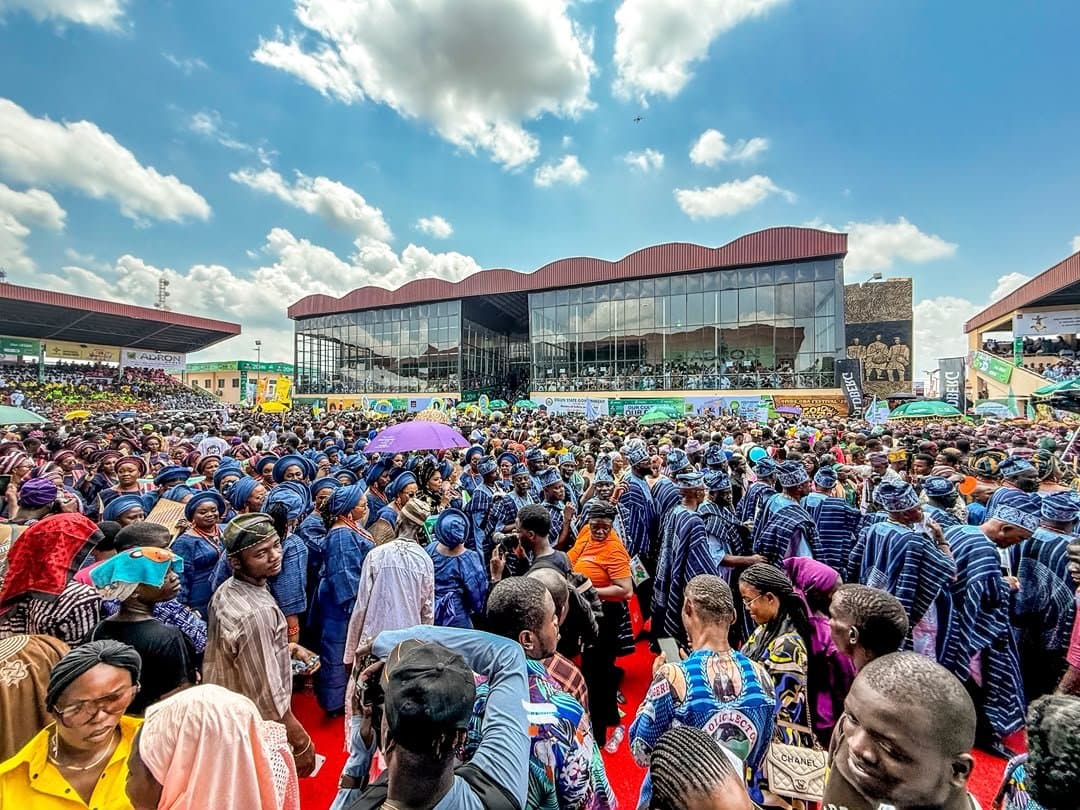
There was colour everywhere, but beneath the colour was memory. The horse-riders still entered with confidence, the Regberegbe groups still arrived in coordinated splendour, and the palace surroundings once again became a meeting point for families, dignitaries, cultural enthusiasts and visitors from far beyond Ijebuland. Yet the 2026 Ojúde Ọba Festival carried a weight that previous editions did not.

For the first time in decades, the celebration was held without Oba Sikiru Kayode Adetona seated as the Awujale of Ijebuland. His presence had shaped the modern meaning of Ojúde Ọba. His 65-year reign had turned the annual gathering into one of Nigeria’s most recognisable cultural festivals, a platform where Ijebu history, age-grade identity, fashion, commerce, community loyalty and royal tradition met in one place. Following his death on July 13, 2025, the 2026 edition became the first opportunity for Ijebuland to publicly celebrate the festival while also confronting the reality of life after one of its longest-reigning monarchs.

The theme, “Celebrating the Legacy of Oba Sikiru Adetona,” was therefore not merely ceremonial. It gave the festival a deeper emotional purpose. Proceedings were led by Chief Sonny Folorunsho Kuku, OFR, the Ogbeni Oja of Ijebuland and head of the Awujale Interregnum Administrative Council. His role reflected the unusual moment in which the festival was taking place: Ijebuland remained between reigns, yet one of its most important cultural traditions still had to continue.

Ad Slot — 728×90

HeritageMetrics recorded 28,735 mentions around the festival, representing a 56 per cent increase from the previous year. Total reach rose to 218.6 million, impressions climbed to 745.3 million, and engagements more than doubled to 8.4 million.

Those figures matter because they show that the festival was not only attended; it was discussed, photographed, filmed, reposted, interpreted and carried into digital spaces across the world. Social conversations reached 81,240, while coverage extended across 11 countries. Positive sentiment stood at 79 per cent, indicating that the majority of the public conversation was celebratory, respectful and emotionally connected to the festival’s meaning.

The HeritageMetrics HM Index awarded the edition a score of 90 out of 100, placing it in the Platinum Tier, the highest classification within the system. That makes the 2026 edition the strongest measured performance in the festival’s record across media attention, engagement, sentiment, international reach and cultural visibility.

Ojúde Ọba is no longer experienced only by those who physically gather in Ijebu Ode. It now exists simultaneously as a live festival, a digital spectacle, a diaspora homecoming, a fashion event, a heritage archive and a national cultural conversation.

Ad Slot — 728×90

The 2026 edition appears to have attracted heightened interest from Ijebu people and cultural enthusiasts outside Nigeria, partly because many understood the festival as a rare moment of collective remembrance. For people who had grown up seeing Oba Adetona as the permanent face of Ijebu monarchy, the first Ojúde Ọba after his death carried the emotional force of a farewell.

Ojúde Ọba fashion is one of the festival’s most powerful forms of communication. The fabrics, jewellery, hairstyles, colours and coordinated appearances of the Regberegbe groups tell stories about lineage, social status, age-grade identity, personal taste and collective belonging.

In many ways, the festival functions like a moving archive of Ijebu aesthetics. Every outfit says something. Every group presentation carries history. Every horse-riding family enters with a visual language that can be traced to prestige, bravery, continuity and community recognition.

That visual power contributes significantly to the festival’s digital success. Ojúde Ọba performs exceptionally well online because it is culturally rich and visually immediate. A single portrait, horse-riding sequence or Regberegbe entrance can travel quickly across Instagram, TikTok, X, Facebook and international media platforms. This helps explain why impressions and engagements rose so sharply in 2026.

Ad Slot — 728×90

Can Ojúde Ọba convert visibility into long-term cultural protection?

A festival can trend globally and still remain vulnerable if its history is not properly archived, if younger generations are not meaningfully involved, or if commercial interests begin to overshadow the cultural structures that gave the festival its meaning.

The festival’s economic impact describe the ecosystem that grows around Ojúde Ọba every year. Hotels fill up, transport activity increases, tailors and designers receive commissions, photographers and filmmakers are booked, food vendors benefit, horse handlers prepare for months, makeup artists work across the city, and media organisations compete for attention.

This means Ojúde Ọba is not only a cultural celebration, it is also a seasonal economic engine for Ijebu Ode and the wider region. The stronger its international visibility becomes, the greater the opportunity for tourism growth, structured sponsorship, local business development and cultural enterprise.

Ad Slot — 728×90

The 2026 edition proved that Ojúde Ọba can survive a moment of uncertainty without losing its emotional centre. It honoured the late Awujale, preserved continuity during an interregnum and reached a larger audience than any measured edition before it.

For decades, Ojúde Ọba grew under the presence and influence of Oba Sikiru Adetona, its future will now depend on whether Ijebuland can preserve the values he strengthened while allowing the festival to evolve responsibly.

The 2026 edition was therefore not simply the strongest on record. It was the first test of what Ojúde Ọba could become after the monarch who helped define it. And based on the attention, emotion, participation and global reach it generated, the festival did not merely survive that test, it announced that its story is still unfolding.

#Awujale of Ijebuland#CitiPlug Insight#Cultural Preservation#Heritage Tourism#HeritageMetrics#Ijebu Ode#Ijebuland#Nigerian Culture#Oba Sikiru Adetona#Ojúde Ọba Festival#Regberegbe#UNESCO#UNESCO Intangible Cultural Heritage#Yoruba Heritage
Ojúde Ọba 2026: How a Festival of Memory Became a Global Cultural Moment
Insight Magazine

Ojúde Ọba 2026: How a Festival of Memory Became a Global Cultural Moment

ShareFXWL

More like this

Theatrefest 2026 to Celebrate Yoruba Arts and Ijebu Heritage in Ijebu-Ode

Theatrefest 2026 to Celebrate Yoruba Arts and Ijebu Heritage in Ijebu-Ode

Ink Man · 22 July 2026
Thousands Gather in Kweme Kingdom for Sacred Thehule Lake Spiritual Rites

Thousands Gather in Kweme Kingdom for Sacred Thehule Lake Spiritual Rites

Ink Man · 21 July 2026

Comments

Be the first to comment.

Your email is required to comment, and signs you up for the Insight Magazine newsletter — you can unsubscribe from any issue.