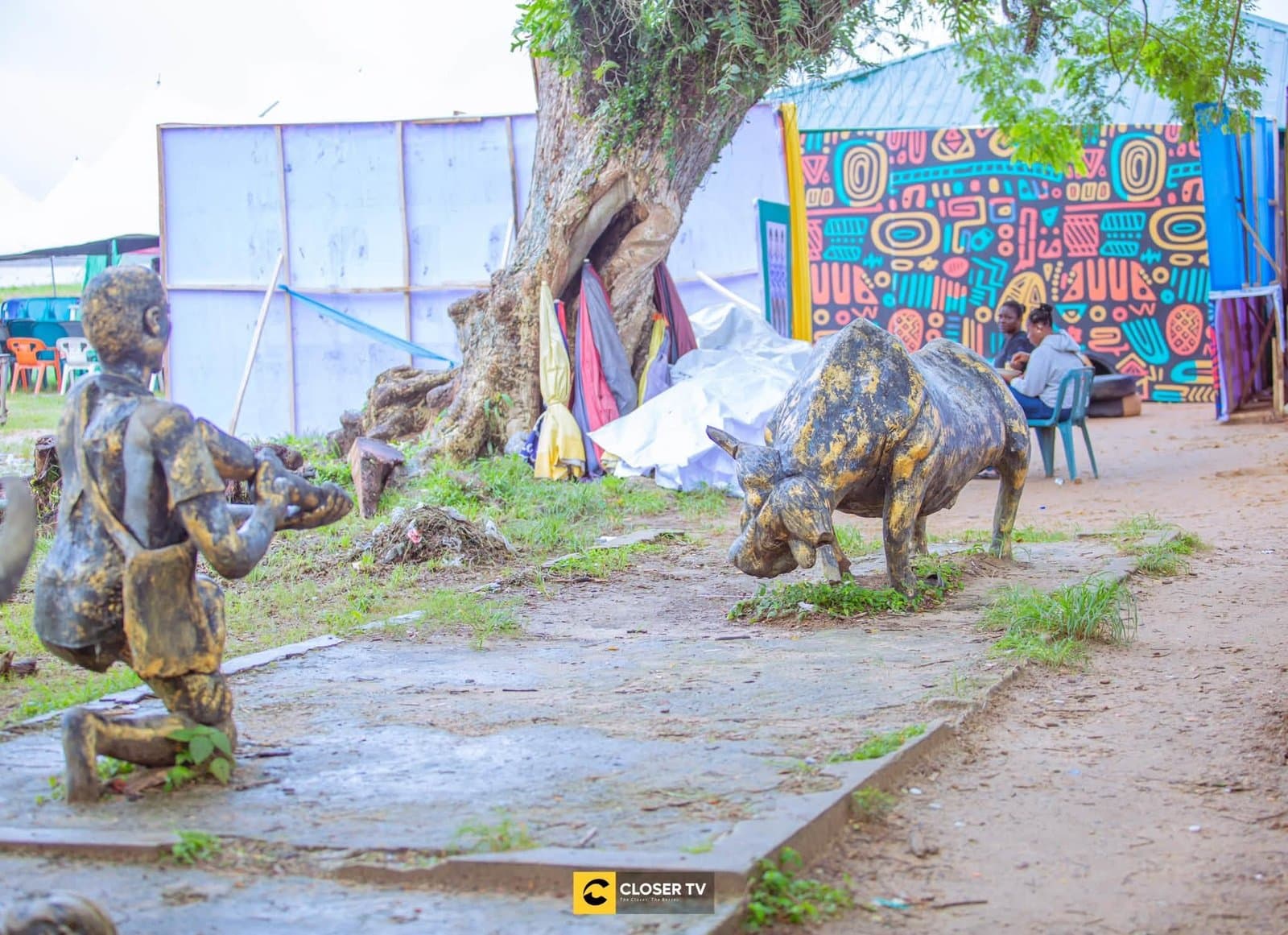
Long before colourful masquerades, canoe regattas and thousands of visitors gathered in Odi every year, the community lived under the shadow of a terrifying buffalo. Nearly seven decades after its death, the story continues to define one of Bayelsa State's most celebrated cultural festivals.
Every community has a story it refuses to forget.
Some are stories of kings who built kingdoms. Others tell of wars that changed history or rivers believed to possess sacred powers. In Odi, an ancient Ijaw community in present-day Bayelsa State, one of the most enduring stories begins not with a king or a warrior, but with a buffalo.
Not an ordinary buffalo.
According to generations of oral tradition, this was a massive wild beast that turned daily life into a nightmare. It wandered through forests and farmlands, attacked anyone unfortunate enough to cross its path and transformed simple farming expeditions into dangerous missions from which some people never returned.
For the people of Odi, the buffalo was more than an animal. It became a symbol of fear itself.
Today, every year, the community gathers to celebrate what they describe as one of the greatest victories in their history through the Odi Ogori Ba Uge Festival, a cultural event that has grown into one of Bayelsa State's biggest heritage celebrations.
When Fear Ruled the Forest
Long before highways connected communities and before modern settlements expanded into the surrounding forests, life in Odi revolved around the land.
Families depended on farming, fishing and hunting for survival. Every morning, men and women journeyed into nearby forests and wetlands, expecting to return home before sunset.
Then came the buffalo.
Local accounts describe the animal as unusually aggressive and extraordinarily powerful. It reportedly charged at farmers, attacked hunters and made movement around parts of the community increasingly dangerous. People began avoiding certain paths altogether. Farms were abandoned. Hunting expeditions became risky. Parents worried whenever loved ones ventured into the bush.
The buffalo had become an unseen ruler of the forest.
Whether every detail has been shaped by decades of storytelling or preserved exactly as it happened, one thing remains undisputed within the community: the animal left a lasting mark on Odi's collective memory.
The Day Everything Changed
Every legend has a turning point.
For Odi, that moment arrived on 27 July 1957.
Community elders recount that after years of fear and repeated attacks, hunters and brave members of the community united with one purpose, to bring down the buffalo once and for all.
It was no longer simply a hunt. It had become a mission to reclaim their land.
After what tradition remembers as a determined communal effort, the buffalo was finally killed.
Its death marked more than the end of a dangerous animal. It represented freedom.
For the first time in years, farmers could return to their fields without constant fear. Hunters reclaimed the forests, and the community celebrated what many regarded as a victory made possible through unity, courage and determination.
That celebration would eventually become an annual tradition.
From Victory to Festival
The event that began as spontaneous rejoicing gradually evolved into a formal cultural celebration.
Today, that celebration is known as the Odi Ogori Ba Uge Festival, often interpreted as the Festival of Victory Over the Buffalo.
What started as a remembrance of one remarkable day has transformed into an annual homecoming that attracts sons and daughters of Odi from across Nigeria and the diaspora.
For many, attending the festival is not merely about entertainment. It is about reconnecting with identity.
The buffalo story continues to serve as a reminder that communities are strengthened when people stand together against common challenges.
A Celebration of Ijaw Heritage
Modern editions of the festival extend far beyond the original story.
Visitors are welcomed by colourful displays of Ijaw culture, traditional music and energetic dance performances that fill the streets with life.
War canoe processions glide across the waterways in spectacular fashion, while masquerades, wrestling contests, cultural exhibitions and traditional ceremonies showcase the rich heritage of one of Nigeria's oldest ethnic nationalities.
Traditional attire transforms the community into a moving exhibition of Ijaw identity, with elders sharing stories that younger generations may never have heard outside festival periods.
For many visitors, the experience offers an opportunity to witness a culture that continues to preserve its traditions despite rapid modernisation.
More Than Folklore
Whether viewed as history, oral tradition or cultural folklore, the buffalo story has become something much larger than itself. It represents resilience.
Communities across the world often build festivals around defining moments that shaped their identity. Some celebrate harvests. Others commemorate victories in battle or honour revered ancestors.
For Odi, the buffalo became the event that united an entire people.
The story has been passed from one generation to another, ensuring that children born decades after 1957 still understand why the festival exists.
It is proof that history is not preserved only in books. Sometimes it survives through songs, festivals, dances and the stories grandparents tell under evening skies.
A New Chapter for Tourism
Beyond its cultural significance, the Odi Ogori Ba Uge Festival has also become an important tourism event for Bayelsa State.
Every edition attracts visitors, cultural enthusiasts, researchers, photographers and members of the Odi community returning home from different parts of Nigeria and abroad.
Hotels experience increased patronage, local businesses welcome more customers, artisans display their crafts and food vendors serve traditional Ijaw cuisine to guests eager to experience the celebration.
As governments and tourism stakeholders continue to promote Nigeria's cultural heritage, festivals like Odi Ogori Ba Uge demonstrate how local history can become a driver of economic activity while strengthening community pride.
Why the Buffalo Still Matters
Nearly seventy years have passed since the day the buffalo was reportedly killed. The forests have changed. The roads are busier. Generations have come and gone.
Yet every year, the people of Odi return to the same story.
Not because they are celebrating the death of an animal, but because they are honouring what it came to represent.
The buffalo reminds them that fear can be overcome. That communities become stronger when they act together. And that even the most frightening chapters of history can eventually become symbols of hope.
In Odi, the buffalo no longer roams the forest. Instead, it lives on in memory, immortalised through one of Bayelsa's most remarkable cultural festivals, where history, heritage and identity continue to meet every year.