Long before podcasts and true crime documentaries became everyday entertainment, one Yoruba broadcaster had already mastered the art of investigative storytelling, and every Friday night, millions of Nigerians stopped whatever they were doing to listen.
There was once a version of Friday night that doesn't quite exist anymore, at least not in the same shape, inside many Yoruba homes.
It belonged to a slower era, before phones buzzed every few minutes, before endless streaming choices replaced a shared national schedule. People built their evenings around what was airing. Dinner came early. Homework got rushed through. Conversations outside wound down before the broadcast began.
Then a particular voice would come on, and rooms would go quiet almost on cue.
Radios got turned up. Children edged nearer to the nearest adult. Some leaned in out of pure curiosity. Others hid behind a parent or gripped a pillow, half-listening to whatever unsettling investigation was unfolding that week.
Across the southwest, that Friday night ritual had a name: Irírí Ayé, Ìrìnkèrindò Akọ́láwolé, first broadcast on FRCN Ibadan back in 1992. It didn't stay just a radio programme for long. It grew into one of the most influential pieces of indigenous investigative broadcasting Nigeria has produced, and listeners tuned in each week already certain they were about to hear something nothing else on air was offering.
Doing It Before It Was Fashionable
Investigative documentaries are everywhere now. TV stations run crime specials. YouTubers chase strange stories into remote towns. Podcasts spend entire episodes untangling a single mystery.
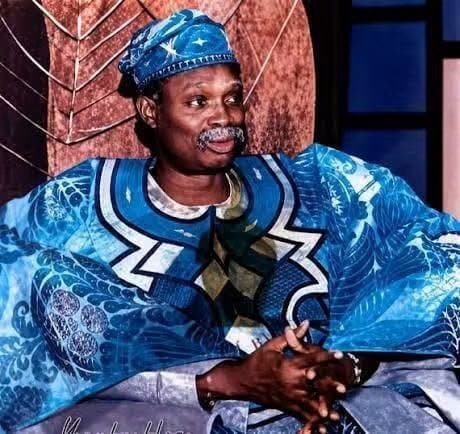
Kọ́láwolé Oláwuyì was already doing a version of that, decades earlier, entirely in Yoruba.
He didn't work off secondhand rumour. He went to forests, derelict buildings, remote villages, shrines, wherever the story actually lived. He sat down with eyewitnesses, traditional rulers, clergy, police, victims, families, and sometimes even the very people at the centre of the controversy.
None of it was just narration layered over silence. Listeners caught footsteps, market noise, birdsong, drumming, prayers, someone crying somewhere in the background, conversation happening exactly where the events did. The setting itself became part of how the story was told.
His delivery stayed calm throughout, and his pauses were exact, just long enough to let a listener's imagination fill in what came next. Whatever the subject, disappearance, superstition, crime, social scandal, people stayed locked in until the closing seconds.
Loved and Feared in Equal Measure
Ask around among people who grew up Yoruba-speaking in the 90s or early 2000s, and the stories tend to sound remarkably alike.
Friday nights could genuinely scare you. Kids wanted to be part of it because everyone else was listening, but plenty were too spooked to actually leave the sitting room once it started. A quick errand suddenly felt impossible. Dark corners got suspicious. Some kids straight up refused to sleep alone afterward. Even the opening theme alone was enough to put the room on edge before a single word aired.
By Saturday, though, the fear had turned into conversation. It showed up in markets, among commercial drivers, in staff rooms, on school playgrounds during break. Every episode became a shared talking point long before anything like social media existed to make that happen instantly.
From Radio to Television
As his following grew, Oláwuyì expanded through his own outfit, Kolbim Communications, which gave him more creative room to work with. His TV production, Ǹkan Nbẹ́, ran on Ogun State Broadcasting Corporation, Galaxy Television and other regional stations, finally putting faces and places to locations audiences had only ever imagined through radio.
But the move to television didn't change what made the work distinct in the first place. It stayed rooted in investigation, in social commentary, in Yoruba cultural identity. Instead of chasing shock value, he leaned into subjects that made people think, called out fraud where he found it, documented indigenous traditions, and covered stories most mainstream broadcasters never touched. In doing so, he proved indigenous-language broadcasting could be smart, popular and culturally significant all at once.
More Than Just Nostalgia
Say his name today, and a lot of Nigerians are instantly back in a crowded sitting room somewhere, battery radio running through a blackout, neighbours crowded around one shared television, a parent telling a kid not to be scared, the Saturday-morning conversation that followed.
Those memories stay vivid because they were never really about the mystery itself. They were about experiencing something together. Long before algorithms started sorting entertainment into personal feeds, millions of people were tuned into the exact same story at the exact same time, a kind of collective anticipation that's genuinely hard to find now.
A Legacy Still Echoing
More than three decades after Irírí Ayé, Ìrìnkèrindò Akọ́láwolé first went to air, Oláwuyì's fingerprints are still on Yoruba broadcasting. Plenty of today's documentary-makers, investigative reporters and indigenous storytellers are working inside a format he helped build: field reporting, cultural grounding, sound design and narration woven together into something that felt distinctly Nigerian.
His biggest achievement was never really about the mysteries themselves. It was proving a story told entirely in Yoruba could hold an entire nation's attention, spark conversation everywhere, and become part of a generation's shared memory.
For a lot of Nigerians, Friday nights just haven't sounded the same since.